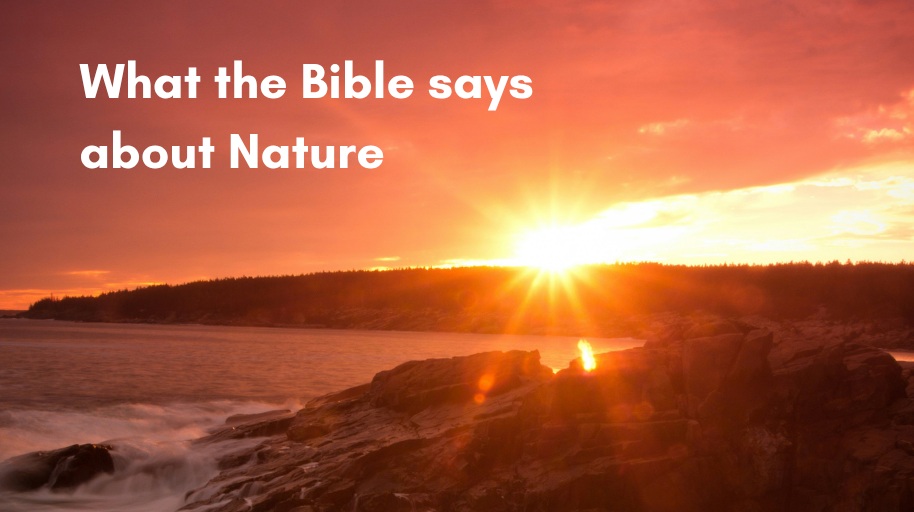
The Bible presents a rich and multi-faceted view of nature, depicting it not as an impersonal resource or an independent deity, but as God’s deliberate creation, imbued with intrinsic value and purpose. This perspective frames humanity’s relationship with the natural world as one of interdependence, responsibility, and reverent appreciation.
Nature as Divine Creation and Revelation
The foundational biblical view of nature is that it originated from the intentional will of God. The opening chapters of Genesis emphasise that God created the heavens, the earth, the seas, and all living creatures, declaring each part “good,” and the whole “very good” (Genesis 1:31). This underscores nature’s inherent worth in the eyes of its Creator, a value that exists regardless of human utility.
Furthermore, the natural world serves as a primary medium through which God reveals His attributes. Psalm 19:1 states, “The heavens declare the glory of God; the skies proclaim the work of his hands.” The beauty, complexity, power, and order found in creation point beyond themselves to a wise and powerful Creator. The Apostle Paul affirms this idea in Romans 1:20, arguing that God’s “eternal power and divine nature” can be “clearly seen” through what has been made, leaving humanity without excuse for ignoring Him. Thus, observing and appreciating nature is, for the biblical worldview, an act of beholding the divine signature etched upon the universe.
Humanity’s Role: Stewardship and Interconnection
The Bible positions humanity uniquely within creation, created in the image of God and given a specific mandate regarding the earth. This mandate includes “dominion” over the creatures and the command to “subdue” the earth (Genesis 1:28). This concept has been historically controversial, sometimes used to justify human exploitation of the environment.
However, a holistic biblical view reframes “dominion” as responsible stewardship, defined by the instruction in Genesis 2:15 to “work [the garden] and take care of it.” The human role is not one of a tyrant, but of a benevolent regent or faithful tenant farmer, accountable to the true owner, God (Psalm 24:1). The Bible emphasises an interdependence between humanity and nature; human actions have direct consequences for the land (Hosea 4:3), and God’s covenant after the flood includes all living creatures, not just people (Genesis 9).
Nature as a Realm of Brokenness and Redemption
While initially perfect, the biblical narrative depicts the entire creation as having fallen into a state of brokenness due to human sin. The “curse” described in Genesis 3 introduces thorns, thistles, and struggle, and the Apostle Paul describes creation as “groaning” and in “bondage to decay” (Romans 8:21-22). This theological perspective helps explain the presence of natural disasters, suffering, and ecological degradation in the world today.
Despite this present brokenness, the biblical view of nature is ultimately one of hope. The future promised in Scripture is not a total escape from the physical world into an ethereal heaven, but the redemption and renewal of creation. Prophetic visions in Isaiah speak of restored ecological harmony, and Revelation 21 promises a “new heaven and a new earth” where God’s presence eliminates all suffering, pain, and death.
Conclusion
The Bible’s view of nature is profound: nature is a good, God-owned creation that reveals His glory, is intrinsically valuable, and is intricately connected to human destiny. It demands human responsibility, challenging followers to be careful stewards who respect the integrity of the natural world. This view provides a strong theological foundation for contemporary Christian engagement in environmental care, seeing the preservation of creation not as an optional secular hobby, but as a moral and spiritual duty that reflects God’s ultimate plan to redeem all things.