The depiction of the “Earth” in the Bible is far more than a mere physical backdrop for human history; it is a central theological character in the unfolding drama of creation, fall, and redemption. The biblical text presents the Earth not as a lifeless commodity, but as a living theatre of God’s action, a recipient of God’s covenant, and a participant in its own ultimate renewal. From Genesis to Revelation, the Earth is consistently portrayed as God’s possession, entrusted to humanity for care and cultivation.
The Earth as God’s Creation and Possession
The foundational view of the Earth begins in Genesis 1, where the planet is meticulously crafted by divine word and declared “very good.” This narrative establishes two crucial theological points: first, the Earth is a deliberate, intentional creation, possessing inherent value in the eyes of its Maker; and second, its existence is entirely dependent on God’s sustaining power.
This ownership theme is reinforced throughout the Old Testament. Psalm 24:1 resoundingly proclaims, “The earth is the Lord’s, and everything in it, the world, and all who live in it.” This asserts that humanity is not the owner of the planet, but merely a tenant or steward. This perspective forms the basis of biblical environmental ethics: all human interaction with the land is conducted under divine authority and oversight. The Earth is a sacred space, reflecting the glory and wisdom of its Creator (Psalm 19:1).
The Earth Entrusted: Human Responsibility and the Fall
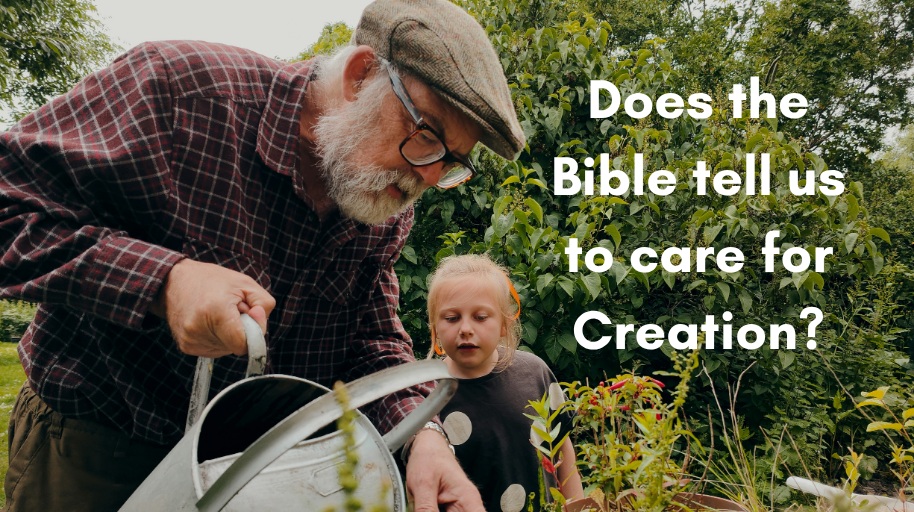
Humanity’s unique role on Earth is established in the Garden of Eden narrative. Humans are made in the image of God and given “dominion” over the earth (Genesis 1:28). This mandate, however, is immediately contextualised by the instruction in Genesis 2:15 to “work it and take care of it” (or “serve and preserve it”). The ideal relationship between humanity and the Earth is one of nurturing stewardship, mirroring God’s own benevolent care for His creation.
The entrance of sin into the world drastically alters this relationship. The “Fall” in Genesis 3 introduces a rupture not just between God and humanity, but also between humanity and the Earth. The ground is cursed, producing thorns and thistles, and human existence becomes a struggle against a resistant natural world. This theological understanding means that ecological degradation and environmental challenges are viewed in the biblical framework as a consequence of human moral failure and a broken relationship with the Creator.
The Earth as a Recipient of Covenant and Justice
The Bible emphasizes the interconnectedness of human actions and the condition of the Earth. When humanity acts unjustly or disobeys God, the Earth suffers the consequences. Prophets like Hosea warned that because of human sin, the land “dries up, and all who live in it waste away; the beasts of the field, the birds in the sky and the fish in the sea are disappearing” (Hosea 4:3). The Bible links social justice and environmental health; neglecting the poor and marginalised often goes hand-in-hand with mismanaging the resources of the Earth.
God’s redemptive plan often involves the Earth itself. The covenant made with Noah after the flood is explicitly a covenant with “every living creature” and the ground itself (Genesis 9). This demonstrates that God’s concern for the Earth extends beyond human welfare, encompassing the entire created order.
The Earth’s Hope: Renewal and Restoration
The biblical narrative concludes not with the abandonment of the Earth, but with its radical renewal. While some passages speak of the current Earth passing away (2 Peter 3:10), the ultimate vision is of a “new heaven and a new earth” (Revelation 21:1; Isaiah 65:17). The Greek word for “new” (kainos) implies qualitative renewal rather than complete annihilation and replacement.
The vision of the New Earth offers a powerful hope: a physical, tangible existence where the effects of sin are reversed, harmony is restored (Isaiah 11:6-9), and God’s perfect justice and peace (=shalom) reign supreme. The ultimate destiny of the Earth is not destruction but glorious transformation, where God’s presence fully dwells with humanity upon a redeemed planet.
Conclusion
The Bible’s view of the Earth is deeply theological, ethical, and eschatological. It is God’s good creation, loaned to humanity as stewards. The present state of the Earth reflects the brokenness caused by sin, but it ultimately awaits a divine renewal. For believers, this framework provides a strong moral imperative to care for the Earth today—working for justice and sustainability as an act of obedience to the Creator and an anticipation of the promised New Earth.