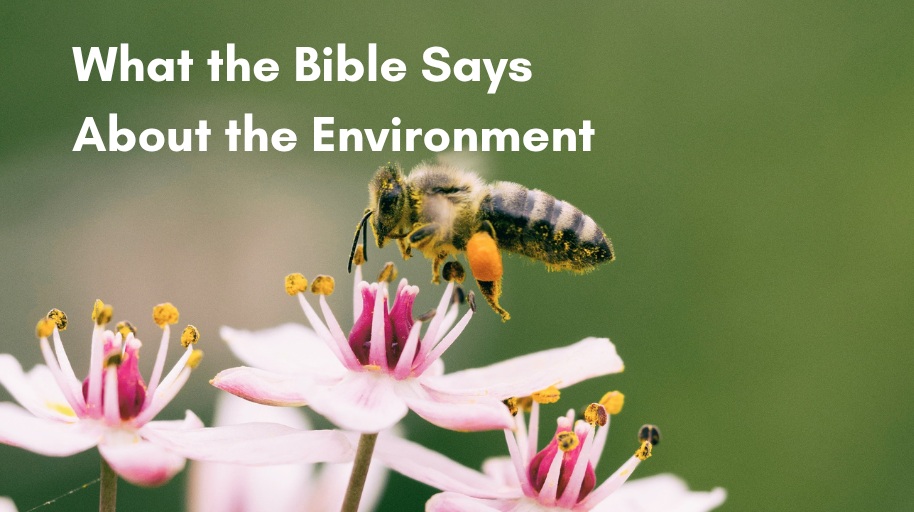
The Bible offers a comprehensive and profound perspective on the environment, providing a theological framework that mandates human responsibility toward the natural world. This view moves far beyond simply using nature for human benefit, instead casting humanity as stewards of God’s creation, accountable for its health and flourishing. From the creation narratives of Genesis to the eschatological promises of Revelation, environmental themes are woven throughout Scripture, providing a strong moral and ethical foundation for contemporary Christian “Creation Care.”
The Divine Origin and Intrinsic Value of Creation
The biblical perspective on the environment begins with a fundamental assertion: the entire universe is the deliberate work of a loving Creator. The opening chapter of Genesis establishes that God brought forth light, land, sea, flora, and fauna, and repeatedly declared His work “good,” culminating in the assessment that all was “very good” (Genesis 1:31).
This repeated affirmation establishes the intrinsic value of creation, a worth that exists independent of human utility. Nature is not a mere collection of resources awaiting human exploitation; it is God’s handiwork, reflecting His glory, wisdom, and power (Psalm 19:1). To harm the environment is thus understood as a failure to respect the Creator Himself. The earth is consistently portrayed as God’s possession: “The earth is the Lord’s, and everything in it, the world, and all who live in it” (Psalm 24:1). This ownership principle fundamentally shifts the human perspective from that of an owner with absolute rights to a temporary steward or tenant accountable to the true proprietor.
The Mandate for Stewardship, Not Exploitation
Humanity’s unique role within creation is defined by the concepts of “dominion” and “stewardship.” In Genesis 1:28, humans are given “dominion” over the earth and commanded to “subdue” it. Historically, this passage has been criticised for fostering a mindset that justifies the relentless exploitation of natural resources, leading to environmental crises.
However, a closer, more holistic biblical interpretation balances this with Genesis 2:15, where humanity is placed in the Garden of Eden “to work it and take care of it” (Hebrew ‘abad and shamar—to serve/till and to keep/preserve). This reframes “dominion” as responsible governance rather than domination. It is a kingly responsibility to care for the kingdom, a pastoral duty to tend the flock. The Bible emphasises sustainable practices, such as the Sabbatical year requirement for the land to rest every seven years (Leviticus 25:3–4), demonstrating an understanding of the need for ecological balance and resource replenishment.
The Interconnectedness of Creation and the Problem of Sin
The Bible teaches that humanity is deeply interconnected with the rest of creation. Human moral failure, or sin, has ecological consequences. The curse in Genesis 3 affects the ground itself, resulting in resistance and struggle. The prophet Hosea laments that because of human deceit and sin, the land mourns and “all who live in it waste away” (Hosea 4:1-3).
This interconnectedness extends to all life. God’s covenant after the great flood in Genesis 9 is made not just with humanity, but explicitly with “every living creature” and the earth itself. The Apostle Paul underscores this in the New Testament, writing that the entire creation “groans” under the weight of human sin and “bondage to decay” (Romans 8:22). This implies that ecological degradation is a spiritual issue as much as a physical one. Furthermore, environmental harm often disproportionately impacts the poor and vulnerable, making Creation Care an essential component of the biblical mandate for social justice and loving one’s neighbour.
Hope and the Renewal of Creation
The biblical narrative does not end with ecological despair but with hope for redemption. The future envisioned in Scripture is a restored creation, a “new heaven and a new earth” (Revelation 21:1). Prophetic literature, such as Isaiah 11, uses powerful imagery of natural harmony—the wolf and the lamb living together—to depict a future reality of perfect peace and justice where “righteousness dwells” (2 Peter 3:13).
This eschatological hope motivates present action. For many Christians, the promise of a renewed Earth means that current efforts to protect the environment are not futile attempts to save a doomed planet, but anticipatory acts of stewardship that align with God’s ultimate plan of cosmic redemption.
Conclusion
The Bible provides a robust theological foundation for environmental responsibility. It challenges believers to move beyond anthropocentric (human-centred) views and embrace a theocentric (God-centred) appreciation of the natural world. From the garden to the renewed city, the Earth is presented as a gift from God that must be nurtured, protected, and respected. For Christians, environmental stewardship is not a political option but a moral imperative, an act of obedience and worship that honours the Creator of all things.