2 Peter 3 is the absolute epicentre of the debate regarding the future of the physical Earth. Rapture proponents and dispensationalists rely heavily on this chapter to argue that the physical universe will be completely vaporised, obliterated, and replaced with a totally different reality. They use verses like 2 Peter 3:10: “…the heavens will disappear with a roar; the elements will be destroyed by fire, and the earth and everything done in it will be laid bare.”
However, Creation Care theologians and anti-Rapture scholars argue that reading this text as an endorsement of planetary annihilation is a massive error. By analysing the literary structure, the historical flood parallel, and critical Greek vocabulary, critics demonstrate that Peter is describing a process of radical purification and renewal, not cosmic annihilation.
Here is how opponents of the Rapture systematically break down 2 Peter 3.
The Noah Parallel: Destruction Does Not Mean Annihilation
To understand what Peter means by the world being “destroyed” by fire, critics argue you must look at how he defines “destruction” earlier in the exact same thought process:
“…by water also the world of that time was deluged and destroyed. By the same word the present heavens and earth are reserved for fire…” (2 Peter 3:6–7)
The Anti-Rapture Analysis:
The Blueprint: Peter explicitly uses the global Flood of Noah’s day as the literal blueprint for the future judgment by fire. Did the physical planet vanish? When the floodwaters “destroyed” the ancient world, the physical sphere of the Earth did not stop existing. The rocks, the soil, and the geography remained. The Meaning of Destruction: In Peter’s mind, “destruction” means the radical wiping away of sin, wicked systems, and corruption. The fire of judgment functions exactly like the water of Noah: it is an agent of deep cleansing that prepares the landscape for a fresh start, not an explosive force that vaporises matter into nothingness.
The Metallurgy of “Elements” (Stoicheia)
“…the elements will be destroyed by fire…” (2 Peter 3:10)
The Rapture Premise: Modern pop-theology reads the word “elements” through the lens of modern chemistry (the periodic table). They assume Peter is describing a nuclear-style reaction where atoms melt and the physical grid of the universe dissolves.
The Anti-Rapture Analysis:
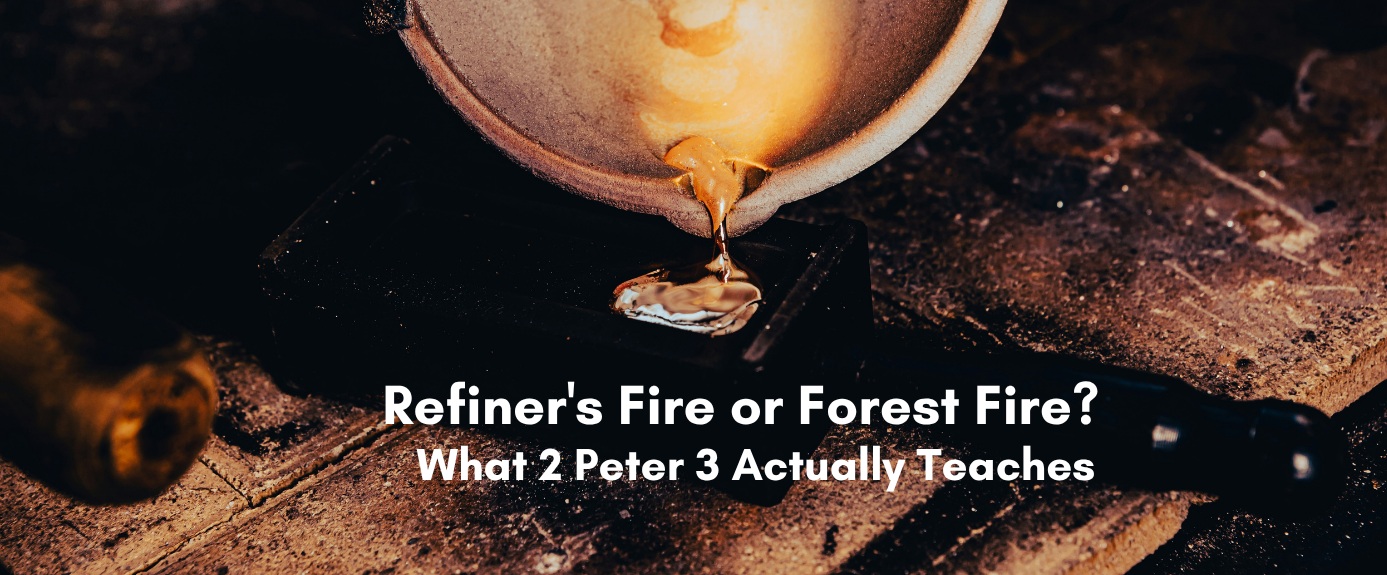
First-century writers did not have a concept of atomic chemistry. The Greek word used is stoicheia. In ancient literature, stoicheia almost always referred to basic principles, heavenly bodies (stars and planets), or spiritual forces of wickedness. Furthermore, the word “destroyed” here is luo, which means “to untie,” “to loosen,” or “to dissolve.” Peter is using the vivid imagery of a refiner’s fire or a foundry. When metals are put into a furnace, the impurities dissolve and separate so the pure gold or silver can be reclaimed. The fire dissolves the bonds of sin holding creation captive; it does not blow the universe up.
The Crucial Textual Variant: “Laid Bare” vs. “Burned Up”
Older English translations (like the King James Version) translate the end of verse 10 as: “…the earth also and the works that are therein shall be burned up.” This old translation is the primary source of the entire annihilation theory.
The Anti-Rapture Analysis:
Modern biblical archaeology and textual criticism have analysed the oldest, most reliable Greek manuscripts (such as the Codex Sinaiticus and Codex Vaticanus). The Actual Word: The earliest manuscripts do not say “burned up.” They use the Greek word heurethesetai, which literally means “will be found” or “laid bare” (as reflected in the NIV and ESV). The Meaning Change: The final fire does not incinerate the Earth out of existence. Instead, it strips away all human hypocrisy, hidden evil, and corruption. The Earth is “laid bare” or exposed naked before the eyes of God. It is an image of a cosmic courtroom audit, not an atomic explosion.
The Definition of the “New” Earth
“But in keeping with his promise we are looking forward to a new heaven and a new earth, where righteousness dwells.” (2 Peter 3:13)
The Rapture Premise: “New” means brand new from scratch, proving the old one was completely thrown away.
The Anti-Rapture Analysis:
The Greek language has two distinct words for “new”: Neos: New in time (brand new, young, a replacement). Kainos: New in quality (renewed, restored, refreshed, transformed). Peter’s Choice: Peter deliberately chooses kainos. The “New Earth” is this exact same physical planet, completely healed of its scars, freed from decay, and structurally repurposed as a home where righteousness can finally live comfortably.
Summary: Refiner’s Fire vs. Forest Fire
The entire dispute over 2 Peter 3 comes down to a choice between two styles of fire:
The Rapture Interpretation: The fire is a destructive forest fire meant to completely incinerate the old planet so it can be replaced by a different home in heaven. The Creation Care Interpretation: The fire is a metallurgical refiner’s fire meant to melt down the raw material, purge the dross of human evil, and cast the creation into a beautiful, renewed shape.
Because Peter anchors the future fire directly to the historic water of Noah, critics argue it is an interpretive error to use this chapter to justify polluting or neglecting the current ecosystem. The planet you are standing on is the exact estate God intends to refine, reclaim, and inhabit forever.
Further reading
- Will our present Earth be Annihilated or Transformed? – Does God destroy the earth or renew it? Explore the theology of transformation and why it makes creation care an essential Christian duty.
- What the Bible says about New Heavens and New Earth – Explore the biblical vision of the new heavens and new earth. Discover how God’s promise of renewal transforms our world and our lives today.
- We Know How the Story Ends: The Promise of a New Creation – Explore the powerful biblical prophecy of the New Heaven and New Earth in the Book of Revelation. Learn how the promise of ultimate renewal changes how we live today