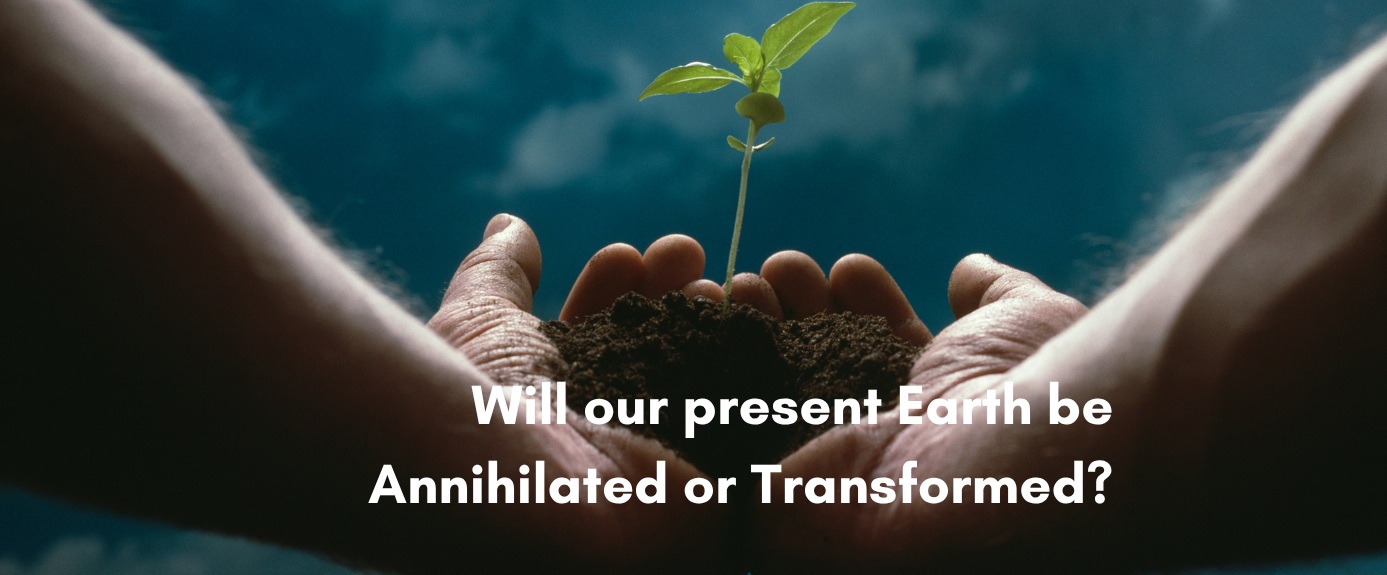
Annihilation or Transformation?
The Historical Theological Debate
Christian history has long wrestled with how literally to interpret the transition from the old earth to the new.
This has solidified into two primary camps: Annihilation (Re-creation) and Transformation (Renovation).
| Theological Position | Core Premise | Key Scriptural Defence | Historical Proponents |
| Annihilation (Creatio ex Nihilo II) | God will completely vaporise the current corrupted universe to dust and build an entirely unrelated, pristine universe from nothing. | 2 Peter 3:10: “The heavens will pass away with a roar, and the heavenly bodies will be burned up and dissolved.” | Classical Dispensationalism, various early Church Fathers (e.g., Irenaeus in his early writings), and certain strands of Lutheran theology. |
| Transformation (Creatio ex Vetere) | God will judge the earth with a refining, purifying fire—cleansing it of sin and corruption but preserving its foundational, structural identity. | Revelation 21:5: “Behold, I am making all things new,” notably not “making all new things.” | John Calvin, Thomas Aquinas, John Wesley, and modern Reformed scholars like N.T. Wright. |
The Refining Fire Context
Proponents of Transformation frequently point to the Greek word used for “New” (kainos), which signifies newness in quality or character, rather than neos, which means brand new in time. They view the “burning up” in 2 Peter 3 as a crucible that refines gold rather than an explosive that annihilates it. They parallel this to Noah’s flood, which “destroyed” the ancient world’s social order and corruption but left the physical globe intact.
Shaping Modern Faith-Based Environmental Ethics
The theological shift toward Transformation has fundamentally reshaped how modern Christian communities view ecological action. If the earth is going to be redeemed rather than incinerated, environmental stewardship shifts from a pointless exercise to an essential, eschatological duty:
[Creation Mandate: Gen 2:15] —> Humans tasked to “till and keep” the earth
[Theological Shift: Transformation] —> Earth is redeemed, not destroyed
[Modern Faith-Based Eco-Ethics] —> Present stewardship mirrors future New Earth
1. Reclaiming “Dominion” as Servant-Stewardship
- Historically, the Genesis 1:28 command to “subdue” the earth was weaponised to justify environmental exploitation.
- Modern eco-theology balances this with Genesis 2:15, where humanity is instructed to “till and keep” (shamar—to guard, protect, and care for) the garden.
- Dominion is recast through the lens of Christ: a model of sacrificial, life-giving leadership rather than tyrannical pillaging.
2. The Concept of “Integral Ecology”
- Popularised globally by Pope Francis’s landmark encyclical Laudato Si’, this view highlights that human life is completely inseparable from the natural environment.
- A broken environment accelerates human suffering, particularly among the poor.
- Caring for the earth is therefore directly tied to the biblical mandates of justice, mercy, and loving one’s neighbour.
3. Escaping “Sinking Ship” Theology
- For generations, an annihilationist view fostered an apathy summarised by the phrase, “Why polish the brass on a sinking ship?”
- With the recovery of the transformation narrative, faith-based environmentalism views local conservation projects—planting native trees, defending clean waterways, and reducing carbon footprints—as prophetic signs.
- These actions serve as live-action trailers for the ultimate cosmic restoration God will one day finalise. In that sense they are anticipatory.