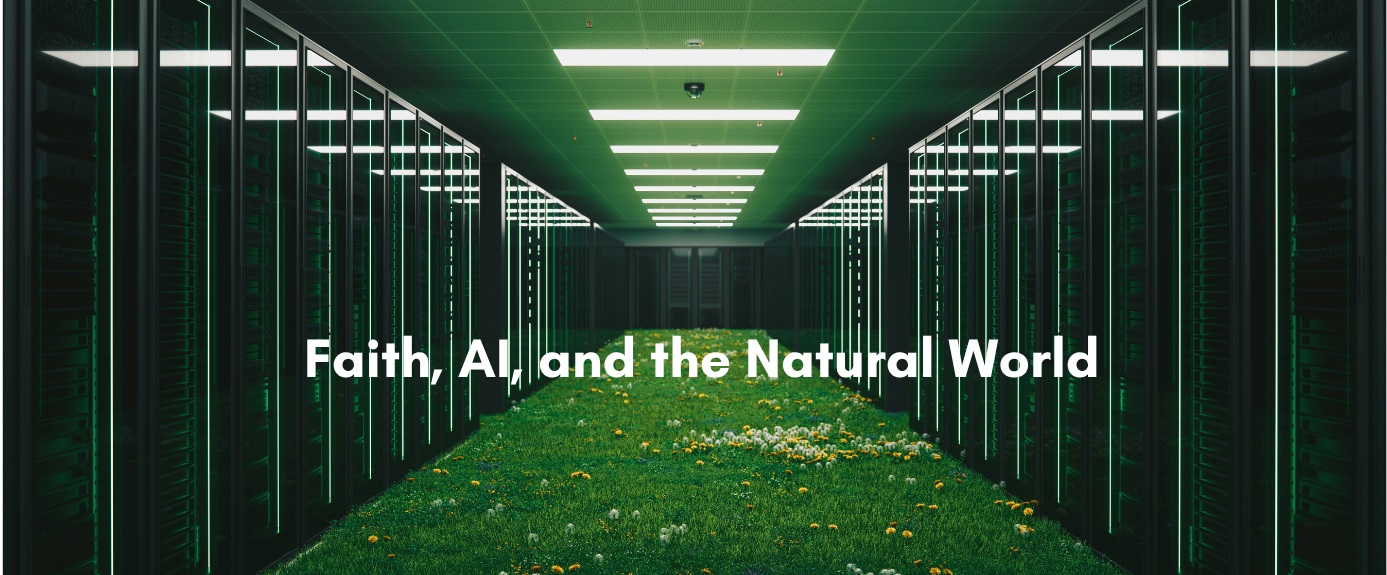
The rapid rise of artificial intelligence (AI) is transforming almost every sector of human society, but its impact stretches far beyond the digital realm. As AI systems become more deeply integrated into global infrastructure, they are altering the physical planet in profound ways. For the natural world, AI represents a dual-edged sword—offering revolutionary tools for ecological conservation while simultaneously placing unprecedented strain on Earth’s energy and water resources.
For people of faith, particularly Christians, this technological shift invites deep theological reflection. Scripture provides a framework for evaluating how tools like AI should be used in relation to the environment, centring on themes of stewardship, creation care, and human limits.
The Ecological Benefits of AI: A Tool for Conservation
AI has become an invaluable asset for environmental scientists, ecologists, and conservationists, enabling data processing and analysis at a scale previously impossible.
- Precision Conservation and Wildlife Tracking: Traditional wildlife monitoring relies on manual data collection, which is slow and labour-intensive. AI-powered software can process thousands of hours of audio recordings from dense forests or millions of images from camera traps in seconds. These systems identify specific animal species, track migration patterns, and flag changes in population health. This real-time data allows conservationists to deploy anti-poaching units or protect critical habitats before damage occurs.
- Climate Modelling and Environmental Forecasting: Understanding climate change requires analysing incredibly complex global climate systems. AI excels at finding patterns within massive datasets. It helps meteorologists and climate scientists build highly accurate predictive models, forecasting extreme weather events, sea-level rises, and shifts in agricultural zones. These insights allow communities to build resilience and adapt to changing environments more effectively.
- Combatting Illegal Deforestation and Fishing: AI is being used alongside satellite imagery to detect illegal logging in places like the Amazon rainforest. Algorithms can identify the sounds of chainsaws or trucks through acoustic monitoring networks and alert local authorities. Similarly, AI tracks maritime data to spot illegal, unreported, and unregulated fishing vessels in protected marine areas.
- Optimising Clean Energy and Smart Agriculture: In agriculture, AI-driven “smart farming” uses sensors and drone imagery to analyse soil health and crop needs. This allows farmers to apply water, fertilisers, and pesticides with extreme precision, drastically reducing chemical runoff into nearby ecosystems. Furthermore, AI optimises renewable energy grids by predicting wind and solar patterns, ensuring that clean energy is stored and distributed efficiently.
The Ecological Costs of AI: Carbon, Water, and Waste
While AI offers sophisticated solutions to environmental problems, the physical infrastructure required to sustain it poses a severe threat to the natural world.
- Massive Energy Consumption and Carbon Emissions: AI models, particularly large language models (LLMs), require immense computational power. Training a single large-scale AI model can emit as much carbon as multiple lifetimes of an average passenger vehicle. Once trained, running millions of daily user queries requires vast networks of data centres that operate continuously. As tech companies expand their AI capabilities, their overall electricity demands soar, often outstripping the growth of renewable energy grids and forcing a continued reliance on fossil fuels.
- Extensive Water Usage for Cooling: Data centres generate incredible amounts of heat. To keep thousands of servers from overheating, facilities rely heavily on water-cooling systems. Millions of litres of water are evaporated daily at individual data centres, often sourced from local municipal supplies or underground aquifers. In regions already facing droughts and water scarcity, the high water footprint of AI infrastructure places a direct strain on local aquatic ecosystems and human communities.
- Resource Extraction and E-Waste: The hardware that powers AI—specialised graphic processing units (GPUs) and microchips—relies on the extraction of rare earth elements and precious metals, such as lithium, cobalt, and copper. Mining these materials often leads to widespread habitat destruction, soil erosion, and water pollution in vulnerable ecosystems. Furthermore, because AI technology advances at a breakneck pace, older hardware quickly becomes obsolete, contributing to the global crisis of toxic electronic waste (e-waste).
A Christian Appraisal: Stewardship, Greed, and Creation Care
To evaluate AI’s impact on the natural world through a Christian lens, believers must look to biblical principles regarding creation, humanity’s role on Earth, and the dangers of unbridled technological pride.
1. The Mandate of Creation Care (Genesis 1 & 2)
The foundation of a Christian environmental ethic begins in Genesis. Scripture asserts that “The earth is the Lord’s, and everything in it” (Psalm 24:1). Human beings were not given absolute ownership of the planet, but rather a mandate to “work it and take care of it” (Genesis 2:15). This role is one of stewardship, not exploitation.
From this perspective, AI can be appraised as a powerful tool to fulfil this creation care mandate. If AI can help restore degraded landscapes, protect endangered species, and reduce agricultural waste, its application aligns closely with the biblical call to tend God’s creation. Using technology to heal the earth is a legitimate expression of human creativity used for the common good.
2. The Warning Against Technocentric Idolatry (Genesis 11)
Conversely, the Bible consistently warns against human arrogance and the belief that technology can solve all existential problems independently of God. The story of the Tower of Babel (Genesis 11) serves as a classic critique of human ambition aimed at self-glorification through engineering.
If society views AI as a saviour that will magically fix the climate crisis without requiring humanity to address deeper issues of greed, overconsumption, and waste, it becomes a form of idolatry. Christians must reject the narrative that technological progress justifies environmental destruction. Overheating the planet and depleting freshwater resources to build faster, more powerful AI models contradicts the biblical command to honour the Creator by respecting the limits of His creation.
3. Contentment vs. Endless Growth (Luke 12)
The resource-heavy nature of AI is largely driven by a global economic model focused on infinite growth and convenience. In the Gospels, Jesus frequently warns against greed and the accumulation of excess (Luke 12:15).
A biblical appraisal of AI must ask searching questions about why certain AI systems are being developed. If an AI tool burns massive amounts of energy simply to optimise targeted advertising or fuel addictive consumer behaviours, it drives ecological degradation for the sake of material gain. Christians are called to advocate for restraint, pushing for tech development that prioritises energy efficiency, resource conservation, and the preservation of the natural world over reckless expansion.
Striking a Faithful Balance
Ultimately, AI is a tool, and its moral value is determined by how it is designed, deployed, and regulated. For the natural world, it holds the potential to be both a great protector and a significant polluter.
Christians can approach AI with a blend of hope and sobre critique. By supporting AI applications that protect ecosystems and demanding transparency regarding the energy and water costs of technology companies, believers can help ensure that digital innovation does not come at the expense of God’s physical creation. The path forward requires using human ingenuity not to master or deplete the earth, but to care for it faithfully.
The Bottom Line
In this solemn time, let us reflect on our current realities and share the great news that, unlike machines, humans are unique by creation in the image of God and by redemption through the life and death of Jesus Christ. We are living beings, not mechanical devices.
Satan told Eve, in Eden, “You will be like God” (Genesis 3:5, NKJV). It was a lie then and it is a lie now. Our hope is not in AI and certainly not in transhumanist fantasies, which teach that we can all but become gods. Our only hope exists in the Lord who made the heavens and the earth.
Further reading
Does the Bible tell us to care for Creation? – Explore the biblical call to care for the earth. Discover how Genesis 2:15 defines our sacred duty as stewards to serve and guard creation.
Faith, AI, and the Natural World
This comprehensive resource package provides a four-session curriculum framework designed to guide communities through the ecological and theological implications of artificial intelligence.
It opens with an in-depth article evaluating the dual-edged nature of AI—balancing its revolutionary potential for precision conservation against the heavy environmental toll of its carbon, water, and e-waste footprints.
Grounded in biblical principles of stewardship and creation care, the package supplies an engaging small group study guide, an introductory 10-minute sermon script, practical ethical guidelines, and leadership resources tailored for groups and organisations.
It culminates in a unified covenant prayer, offering churches a balanced roadmap to transition from passive digital consumers to active, faithful stewards of the natural world.
Phillip Donnell is the Director of New Creation New Zealand, which seeks to inspire and equip Christians to care for creation. Contact: phillipjohndonnell@gmail.com