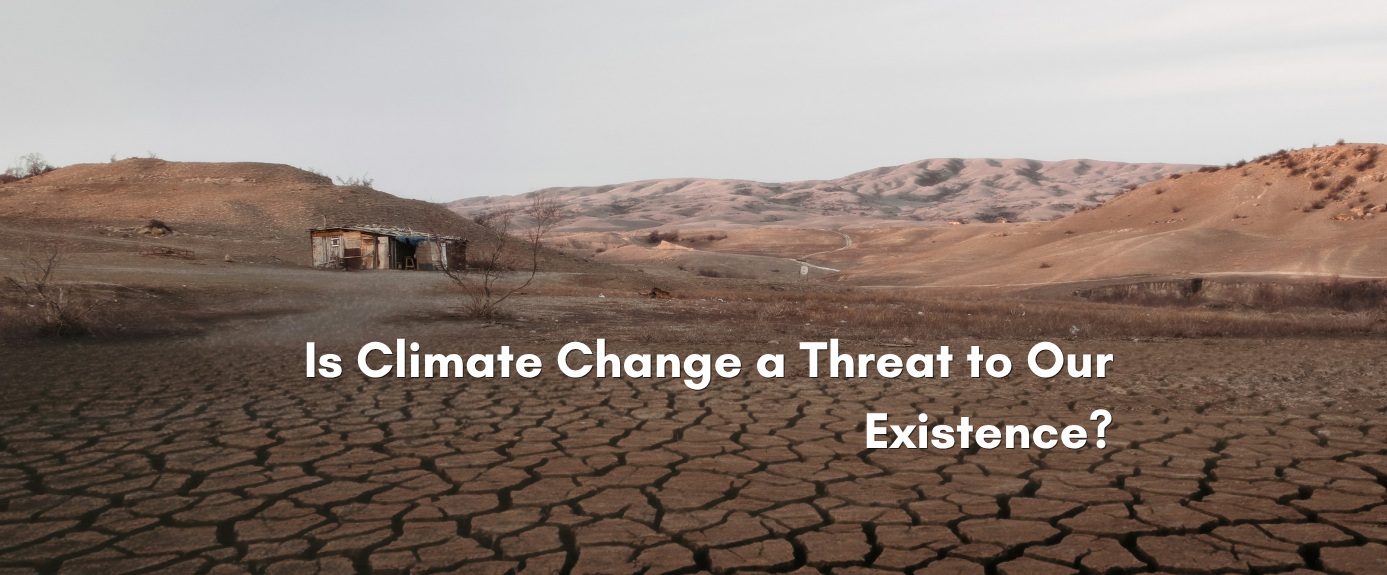
Is climate change an existential threat that will wipe out humanity? Why the worst case is devastating but survivable, and why that matters.
Leaders Are Calling It an Existential Crisis
What Politicians and Advocates Are Saying
- At a virtual Leaders’ Summit in April, President Joe Biden referred to climate change as “the existential crisis of our time”, echoing comments by fellow American politicians Kamala Harris and Jay Inslee.
- In June, Prime Minister Jacinda Ardern said the climate crisis was a matter of “life and death” as she spoke at the launch of a new roadmap for the government’s response to global warming.
- UN Secretary General António Guterres has said “The problem is that the status quo is a suicide.”
- Swedish teenager Greta Thunberg has taken an arguably alarmist bent in her advocacy for climate solutions in the EU, saying, “Our house is on fire. I don’t want your hope. … I want you to panic.”
She’s gotten strong reactions from politicians, suggesting that at least sometimes a relentless focus on the severity of the emergency can get results.
What Does “Existential Threat” Actually Mean?
It’s reassuring to see candidates on the national stage take climate change seriously as the grave danger it is, but few state what exactly they mean by “existential threat.”
There’s a standard meaning of that phrase: that it’s going to wipe out humanity — or even, all life on our planet. Civilization will topple, and famine and natural disasters will pick off the survivors.
The Breakthrough Report and Extinction Scenarios
Scenarios like these have attracted intense attention over recent years. In 2018 one of the most prominent arguments that climate change poses an existential threat went viral in Vice: “New Report Warns ‘High Likelihood of Human Civilization Coming to an End’ Within 30 Years.’”
The Vice story summed up a new report from the Breakthrough National Centre for Climate Restoration, an Australian think tank, arguing that the Intergovernmental Panel on Climate Change analysis of the impacts of climate change understates how much harm it’ll do, and that in reality we face something much worse, with runaway feedback effects amplifying the initial warming until the Earth is “largely uninhabitable.”
It doesn’t actually argue that the world will end in 30 years, but it suggests we’ll reach the tipping point by then.
Wildly Exaggerated?
Some scientists viewed the Breakthrough Report as wildly exaggerated.
The fact is that even the most pessimistic reports, evaluated responsibly, don’t suggest climate change will end human civilization, much less within our lifetimes, so don’t stop saving for retirement.
But the Vice piece tapped into what’s actually been a long-running and sometimes contentious conversation about the climate crisis — specifically, about whether it’s merely just devastating or in fact an existential risk to humanity.
Devastating but Survivable
What the IPCC and World Bank Expect
The expected effects of climate change, according to organizations like the IPCC and the World Bank, are fairly terrifying, but they don’t predict mass civilizational collapse.
- Most models warn that as a result of climate change, the incredibly rapid progress humanity has been making in life expectancies and in ending extreme poverty will stall.
- Lots of people will die, most of them low-income.
In short, it will be devastating but survivable.
It’s not surprising that this view gets less attention than extreme, extinction-focused scenarios. Scientists don’t all agree, and that uncertainty creates room for the most shocking stories to go viral.
The View From Existential Risk Research
Existential risk researchers are extremely concerned with the difference between the annihilation of humanity and mass casualties that humanity can survive.
John Halstead, for example, thinks that some of the statistical modelling used is simplistic and irresponsible, and considers that even 10 degrees would not really cause the collapse of industrial civilization, though the effects would still be pretty horrifying.
The last distinction Halstead draws — of climate change as being awful but not quite an existential threat — is a controversial one.
Obviously, and this needs to be stressed, climate change is a big deal either way.
The Deeper Disagreements
A Disagreement Over Worldviews
Beneath the disagreement over climate risks is a disagreement over worldviews.
- From one perspective, quibbling over whether climate change will kill millions or billions is a waste of time when, in either case, we urgently need to act. To many minds, those two outcomes seem pretty similar.
- But from another perspective, the difference is deeply significant; for example, it changes whether potential solutions that carry significant risks, like some forms of solar geoengineering, are warranted.
Does Alarmism Help or Hurt?
Another broad disagreement is whether alarmism makes our prospects of tackling climate change better or worse.
- As some people see it, we’re not doing nearly enough to fight climate change, so we’d better focus in on the worst-case scenarios in case that will be what it takes to finally spur people to action.
- Others, though, worry that alarmism, far from motivating people, leads to paralysis — too much despair about the future to even bother working on it.
So Where Does This All Leave Us?
It’s worthwhile to look into the worst-case scenarios, and even to highlight and emphasize them, but it’s important to accurately represent current climate consensus along the way.
It’s hard to see how we solve a problem we have widespread misapprehensions about in either direction, and when a warning is overstated or inaccurate, it may sow more confusion than inspiration.
Climate change won’t kill us all. That matters. Yet it’s one of the biggest challenges ahead of us, and the results of our failure to act will be devastating.
As Jay Inslee rightly declared as early as 2013: “This we know, our world is changing faster and more dramatically than ever before…We are the first generation to feel the sting of climate change, and the last generation that can do something about it.”
That message — the most accurate message we’ve got — will have to stand on its own.
Further reading
- A Lot More at Stake: Climate Change, Romans 8, and the Call to Discipleship – Explore how Jesus’s death connects to climate justice, Romans 8, and the call for Christians to choose discipleship over denial.
-
Six Arguments to Refute Your Climate-Denying Relatives – Six science-backed answers to your climate-denying relatives’ favourite arguments — respectful, factual, and ready for the dinner table.
-
Transformation or Obliteration? Rethinking Earth’s Future – Discover N.T. Wright’s transformational theology: Earth is renewed, not destroyed, with real implications for creation care and stewardship.