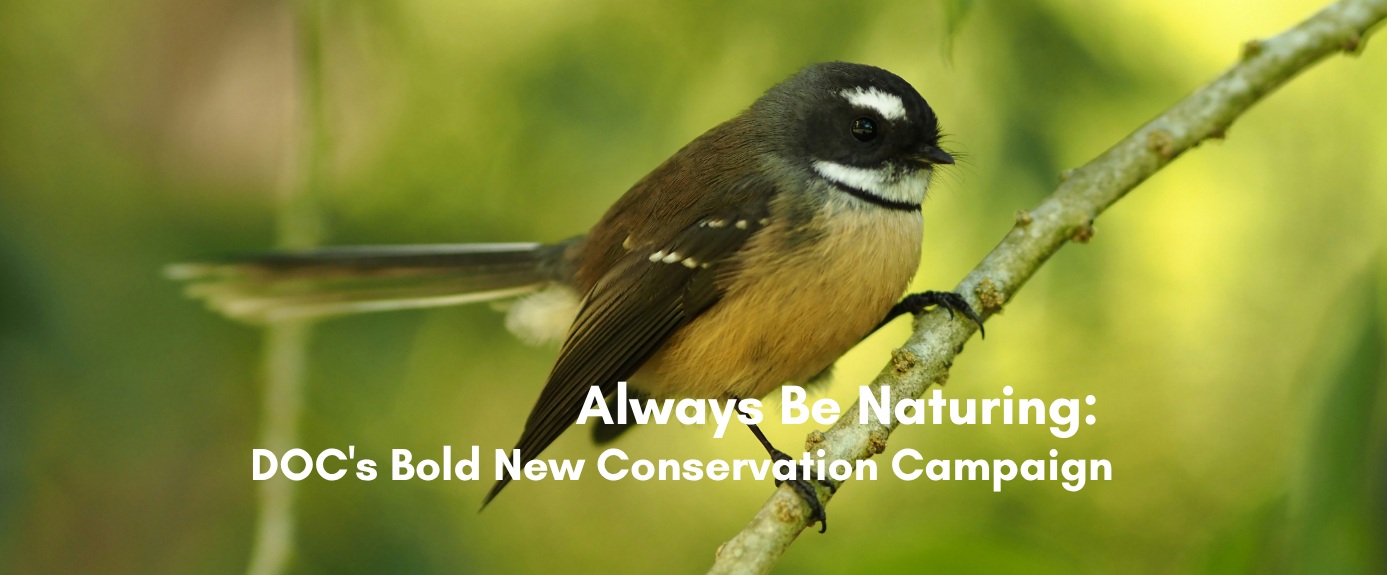
In September 2025, the Department of Conservation (DOC) launched Always Be Naturing, a transformative multi-year campaign designed to redefine New Zealand’s relationship with its environment. This movement goes beyond traditional “look but don’t touch” conservation, urging New Zealanders to view nature as a vital system that underpins their identity, economy, and wellbeing.
The campaign represents a fundamental shift in how the government communicates environmental stewardship. Moving away from traditional, often academic conservation messaging, the campaign adopts a modern, inclusive, and urgent tone. Its main features are designed to bridge the gap between “loving nature” and “living in a way that saves it.”
The core pillars and features of the campaign Always Be Naturing:
1. The Introduction of “Naturing” as a Verb
The campaign introduces the concept of “naturing” as an active, daily habit rather than a sporadic hobby. It is defined as the intersection of spending time in the natural world for enjoyment and actively giving back by contributing to its health. By turning conservation into a verb, DOC seeks to lower the barrier to entry and show that meaningful impact doesn’t require a science degree or hiking boots. Instead, it encourages a range of “acts of naturing,” such as:
- Backyard Action: Building wētā motels or bird feeders to support local biodiversity.
- Predator Control: Setting traps or donating to predator-free initiatives to protect native birds from the predators that kill 25 million of them annually.
- Daily Habits: Putting a bell on a cat, picking up plastic at the beach, planting native shrubs, reporting a sighting of a rare species.
- Connection: Simply sharing nature trivia at dinner or admiring the stars to foster a deeper appreciation for the environment.
The name itself is a nod to the “Always Be” mentality, suggesting that conservation should be a constant, subconscious priority in every decision a New Zealander makes.
2. Bridging the “Perception Gap”
The campaign was born from a stark disconnect and dangerous misconception: while 89% of New Zealanders believe our environment is “clean and green” and that nature is doing “okay”, the reality is that 63% of rare ecosystems are under threat (some on the brink of collapse) and over 4,000 native species are at risk of extinction. By presenting these “hard truths” alongside beautiful imagery, the campaign creates a sense of “positive urgency” — empowering people to act rather than causing them to switch off due to despair.
To bridge the gap between perception and reality, DOC redefines New Zealand’s population, asserting that this country has 695 billion residents—a figure that includes not only 5 million humans but also every bird, tree, insect, and marine mammal. This approach aims to grant nature “citizenship” in the minds of Kiwis and to make conservation personal, illustrating that if we “count on nature,” nature must also “count” in our daily actions. It shifts the perspective from nature being a backdrop for human activity to nature being a vital, living community that deserves the same care and protection as our human neighbours.
3. Economic and Business Integration
Unlike previous campaigns that focused purely on the “intrinsic value” of natural phenomena, Always Be Naturing explicitly links the environment to the economy, describing it as “the supply chain’s supply chain,” contributing roughly $57 billion to the economy annually.
The campaign provides a “Business Kete” (toolkit), encouraging companies to integrate “naturing” into their corporate social responsibility and make conservation an integral part of their brand. It highlights that 60% of Kiwis are more likely to support brands that actively protect the environment, making conservation a savvy business move.
Financially, the campaign represents a new “smarter partnership” model for the government. Funded via the International Visitor Levy, the $2.07 million initial investment is projected to unlock $16.4 million in revenue and savings through private-sector partnerships and increased volunteering over three years. It offers a sustainable model for the future.
4. Digital-First and Peer-to-Peer Engagement
The campaign moves beyond static billboards, utilizing a highly interactive digital platform. Through the Always Be Naturing website, DOC provides “How-to” guides for backyard trapping, composting, and bird-friendly gardening. The campaign encourages people to share their “acts of naturing” on social media, using peer influence to make conservation “cool” and culturally expected. So a resource hub and community scaling are key aspects.
Conclusion
The Always Be Naturing campaign is more than a marketing exercise; it is a cultural intervention. Ultimately, it is a call for long-term behavioural change. It posits that conservation is not just for the experts; it is a collective daily habit that ensures New Zealand’s unique natural heritage remains its greatest asset for generations to come. By rebranding New Zealand as a massive, multi-species community and framing conservation as a daily habit, DOC is attempting to create a sustainable future where nature is not just something we visit on the weekend, but something we nurture every single day.
For more information, go to The Department of Conservation. Always be naturing
Further reading
- Annihilation or Transformation? The Historical Theological Debate – Does God destroy the earth or renew it? Explore the theology of transformation and why it makes creation care an essential Christian duty.
- Download Biblical Mandate for Creation Care
- Download Fifty Top Tips for Creation Care